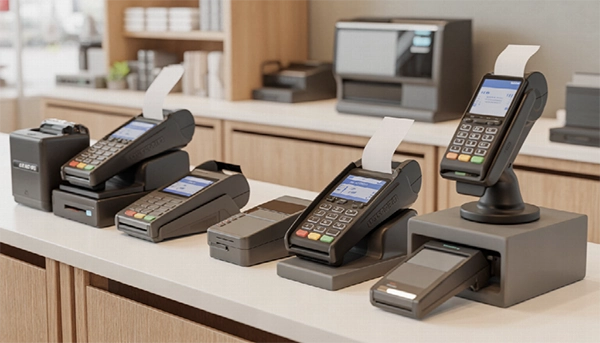
Countertop and Smart POS Terminals are best for fixed repair stores where customers drop off and pick up devices; Mobile Card Readers and Wireless Terminals are best for on-the-go or field -visit repairs where technicians meet clients off-site.
How Credit Card Terminals Are Transforming Device Repair Payments

Updated On October 26, 2026
Device repair companies are adapting to meet rising customer expectations for quick, easy, and secure payment methods. With devices such as smartphones, laptops, and other electronics being repaired, technicians must have a reliable method of processing payments. Credit card terminals can be used to make payments easier, more secure, and provide an improved customer experience.
According to the Federal Reserve’s payments study, card-based transactions now account for the majority of consumer purchases, with contactless payments growing at double-digit rates annually. Let’s discuss in detail through this article.
Table of Contents:
- The Mechanics Behind Modern Payment Processing
- Selecting Equipment That Matches Your Business Model
- Security Standards That Protect Everyone
- Emerging Technologies Reshaping Payment Experiences
- Operational Benefits Beyond Transaction Processing
- Implementation Considerations for Repair Businesses
- Looking Ahead: Payment Technology on the Horizon
- FAQs
The Mechanics Behind Modern Payment Processing
Credit card terminals serve as the overpass between a customer’s payment card and the complex network of banks and mainframes that authorize transactions. When a customer inserts, swipes, or taps their card, the terminal encodes the payment information and sends it through a payment access to the card network, such as Visa, Mastercard, American Express, or Discover. The network routes the request to the customer’s bank, which either accepts or rejects the exchange based on available funds and fraud checks.
This entire process, which involves multiple security checks and data transfer, usually completes in two to three seconds. The speed matters in repair shops, where customers often wait while technicians analyze issues or complete quick fixes. A terminal that processes payments effectively keeps the line moving and reduces the awkward silence that comes with waiting for approval.
Modern monitors handle multiple payment methods through a single device. EMV chip readers provide better security for card-present transactions, while NFC antennas permit contactless payments from cards and smartphones. Many devices also include backup connectivity options; if the main internet connection fails, they can switch to handset networks or store transactions for batch processing later.
Selecting Equipment That Matches Your Business Model
The right terminal depends on how your repair business is managed. Shops with fixed counters have different needs than mobile repair support that travels to customers. Several factors should regulate your decision:
- Transaction volume: High-volume shops profit from terminals with faster processors and receipt printers that won’t barrier during busy periods
- Mobility requirements: Mobile repair services need wireless solutions with long battery life and trustworthy cellular connectivity
- Integration capabilities: Terminals that cooperate with inventory management and customer relationship systems decrease double-entry and tracking errors
- Payment method support: Devices should admit chip cards, contactless payments, and mobile wallets at minimum; some customers no longer carry physical cards
- Total cost structure: Across the purchase price, consider transaction fees, monthly service charges, and costs for paper rolls and supplements.
Repair businesses looking to upgrade their payment framework can find terminals designed for various business models, from compact worktop units to movable devices that fit in a technician’s toolkit. The key is matching the device’s capabilities to your actual workflow instead of paying for features you won’t use.
Countertop terminals work well for shops with committed checkout areas. These devices usually offer larger screens, built-in printers, and stable Ethernet connections. Portable stations suit businesses that process payments at different locations within a shop; possible at a diagnostic station or pickup counter. Mobile card readers, which connect to smartphones or tablets, provide maximum variability for technicians who perform repairs at customer locations.
Security Standards That Protect Everyone
Payment security isn’t optional; it’s a requirement executed through the Payment Card Industry Data Security Standard (PCI DSS). These standards, maintained by the major card networks, create minimum security requirements for any business that accepts card payments. Adherence protects both the business and its consumers from the financial and reputational damage of data breaches.
The PCI Security Standards Council outlines twelve core requirements covering everything from firewall arrangement to access controls. For most small repair shops using modern stations, compliance primarily involves using approved equipment, maintaining secure networks, and following proper processes for handling card data. The stations themselves handle much of the heavy lifting, encoding data at the point of entry and contactless sensitive information so it never obtains in readable form on your systems.
Key security features to verify in any terminal include:
- Point-to-point encryption (P2PE): Scramble card data the moment it’s read, before it enters your network
- Tokenization: Substitutes actual card numbers with random tokens for transaction records and receipts
- EMV certification: Secure the device properly reads chip cards and shifts fraud liability away from your business
- Regular security updates: Manufacturers should provide microcode updates that patch exposure as they’re discovered
- Tamper detection: Physical security features that alert you if someone attempts to open or alter the device
Businesses that fail to maintain PCI observance risk more than just security breaches. Card processors can enforce fines, increase transaction fees, or terminate trader accounts. In the event of a breach, non-compliant businesses may be held liable for fraudulent charges and the cost of reprinting compromised cards, expenses that can easily surpass six figures.
Emerging Technologies Reshaping Payment Experiences
The payment terminal market continues to develop rapidly, driven by consumer expectations and technological abilities. Several trends are particularly relevant for device mend businesses looking to stay current.
Contactless payments have moved from originality to necessity. The McKinsey Global Payments Report notes that wireless transactions now represent a significant portion of in-person payments in many markets, with raising accelerated by health concerns during the widespread. Customers appreciate the speed; contactless transactions typically process 30-40% faster than chip inclusion, and the reduced physical contact with shared surfaces.
Mobile point-of-sale systems are obscuring the line between terminals and software. Modern solutions blend card readers with tablets or smartphones running full-featured business applications. These systems can process payments, track records, schedule appointments, and manage customer communications from a single device. For repair shops, this merging eliminates the need to switch between systems when checking in a device, processing payment, and programming pickup.
Biometric validation is beginning to appear in consumer payment devices. While fingerprint and facial recognition have been average in smartphones for years, payment terminals are starting to integrate these technologies for transaction approval. This adds another layer of security beyond PINs and signatures, though raising remains limited by the need for industry-wide standards.
Cloud-based payment platforms offer advantages beyond simple exchange processing. These systems provide real-time reporting available from any device, automatic software updates, and the capability to manage multiple locations from a central control panel. For repair businesses with several locations or franchise operations, cloud platforms simplify mistakes and ensure constant payment experiences across all sites.
Operational Benefits Beyond Transaction Processing
Efficient payment systems deliver advantages that expand well beyond simply collecting money. Modern terminals create data that helps repair businesses understand their processes and serve customers better.
Transaction records provide a detailed understanding of business patterns. You can identify peak hours for employment decisions, track which services generate the most income, and spot seasonal trends in repair types. Many systems integrate with accounting software, automatically classifying income and simplifying tax preparation. This removes the manual reconciliation that expended hours at month-end with older systems.
Customer experience improves when payments happen quickly and dependably. Long waits at checkout create a negative final concept that can overshadow excellent repair work. Terminals that process exchange in seconds, print clear receipts, and offer multiple payment options reduce rubbing at the moment customers are most excited to leave with their repaired devices.
Error reduction represents another significant benefit. Manual payment entry creates opportunities for interchange errors, incorrect amounts, and misapplied payments. Modern terminals exclude most of these issues through direct card reading and intuitive amount entry. When integrated with repair management software, they ensure that payments are correctly related to work orders and customer accounts.
The ability to accept varied payment methods expands your potential customer base. Some customers favor credit cards for the purchase protection they offer. Others use debit cards to avoid interest charges. Mobile wallet users value the comfort of paying with their phones. By accepting all common payment types, repair shops avoid turning away customers who don’t carry their selected payment method.
Implementation Considerations for Repair Businesses
Deploying new payment terminals involves more than unboxing the appliance and obstructing it in. Successful implementation requires planning around several operational factors.
Staff training ensures that employees can handle the full range of payment scenarios. While modern terminals are designed for natural operation, staff should know how to process refunds, handle rejected transactions, troubleshoot connectivity issues, and support customers unfamiliar with contactless payments. Most terminal providers offer training resources, but building this into your onboarding process ensures steady service quality.
Network infrastructure must support dependable payment processing. Terminals need stable internet connections, whether through Ethernet, Wi-Fi, or cellular networks. Shops in areas with inconsistent internet should consider terminals with backup connectivity options or the ability to store transactions offline for later processing. Nothing aggravated customers more than being told “our system is down” when they’re ready to pay.
Receipt management has developed beyond simple paper printouts. Many customers now prefer email or text receipts, which decrease paper costs and provides them with digital records they won’t lose. Terminals that offer digital receipt options should be arranged to make this the default, with paper available as a backup. This small change can considerably reduce your receipt paper expenses over time.
Maintenance and support arrangements matter when problems emerge. Payment terminals are reliable, but they’re not protected against hardware failures, software setbacks, or connectivity issues. Understanding your provider’s support options, response times, replacement policies, and technical help availability prevents payment processing from becoming a holdup when issues occur.
Looking Ahead: Payment Technology on the Horizon
The route of payment technology suggests several developments that will likely impact device repair businesses in the coming years. While some remain tentative, others are already appearing in early implementations.
Cryptocurrency acceptance is moving from margin to mainstream, though adoption in non-digital retail remains limited. Some payment processors now offer terminals that can accept cryptocurrency payments, transforming them to traditional currency for the merchant. Whether this becomes applicable for repair shops depends largely on customer demand and the strength of digital asset markets.
Artificial intelligence is being combined into payment systems for fraud detection and customer insights. AI algorithms can identify rare transaction patterns that might symbolize fraud, flag potentially problematic payments before they’re processed, and analyze customer behavior to recognize opportunities for service improvements. These abilities are currently more common in enterprise systems but are slowly appearing in small business solutions.
Integrated commerce platforms aim to eliminate distinctions between online and in-person payments. These systems allow customers to start an exchange on one channel and complete it on another, possibly researching repair options online, depositing a device in-store, and paying through a mobile app when the repair is complete. For repair businesses with both physical locations and online presences, United Commerce creates seamless experiences across all touchpoints.
The device repair industry will continue to see payment technology develop alongside the devices being fixed. Staying informed about these developments and being willing to upgrade systems when customer assumptions shift will remain an ongoing requirement for competitive repair businesses.
FAQs
What type of credit card terminal is best for a device repair shop?
How do mobile repair technicians accept card payments in the field?
Technicians use a compact mobile card reader or a smartphone running a Tap to Pay or virtual terminal app linked via Bluetooth or cellular data to authorize payments instantly.
Are credit card payments safe for high-value gadget repairs?
Yes, modern terminals use end-to-end encryption and tokenization, meaning raw card numbers are never stored on the local device or exposed during transmission.