Ans: In terms of overall longevity, iPhones tend to outlast other devices by offering enhanced software optimization and an extended period of time for receiving updates.
iPhone vs Samsung: Which Smartphone Is Better for You?

Updated On March 17, 2026
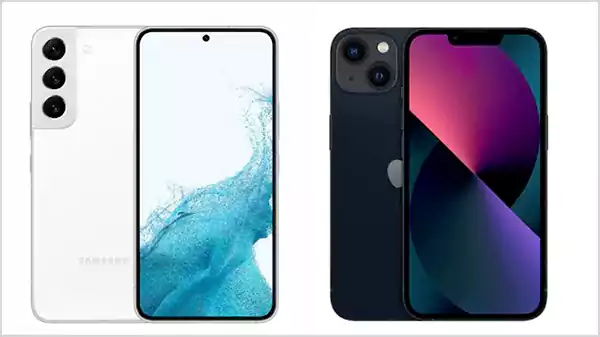
iPhone vs Samsung are two big players in the market who lead the way in terms of quality, reliability, and functionality. For example, Apple focuses more heavily on the optimization and stability of its products, while Samsung tends to put more emphasis on being able to customize its products through advanced display technology and innovative hardware. These different approaches play a key role in how each phone performs in real-world usage and what’s a better choice for you.
Users who frequently compare smartphones often explore dedicated device guides like the iPhone repair and Samsung repair to understand troubleshooting tips, repairs, and performance insights before choosing between the two ecosystems.
Table of Content:
- iPhone vs Samsung at a Glance
- Design & Display Comparison: iPhone vs Galaxy
- Performance & Speed: Apple vs Samsung
- Camera: Samsung vs iPhone
- Battery Life & Charging: Which Actually Lasts Longer?
- Software Experience: iOS vs Android (Daily Use Reality)
- Storage, Connectivity & Hidden Features
- Price & Long-Term Value: Which Is Worth Your Money?
- iPhone vs Samsung: Pros and Cons (Honest)
- Is Samsung Better Than iPhone?
- Is iPhone Better Than Samsung?
- Which Is Better: iPhone or Samsung?
- What Is the Best Phone in the World Right Now?
- Long-Term Reliability & Repairability
- Conclusion:
- FAQs
iPhone vs Samsung at a Glance
Here’s a quick verdict table mentioning what makes the iPhone vs Samsung stand out in the market.
| Category | iPhone | Samsung | Winner |
| Performance | Extremely optimized chips | More RAM but less optimized | iPhone |
| Camera | Best video quality | More versatile photography | Tie |
| Battery | Efficient optimization | Large battery capacity | Samsung |
| Software | Stable and simple | Customizable and flexible | Tie |
| Value | Higher resale value | Better upfront value | Tie |
Design & Display Comparison: iPhone vs Galaxy
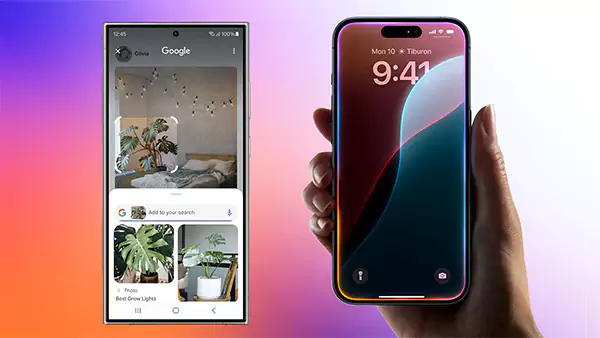
Apple and Samsung both have top-of-the-line designs for their devices. Samsung outdoes Apple with its technological displays, whereas Apple is more concerned with making its devices have the same type of build quality, consistent construction, and durable build materials.
The materials and construction of each brand differ by both the type of materials and the philosophy behind how they are ultimately put together:
- The iPhone is constructed with an aluminum or titanium frame and ceramic shield glass, while the Samsung Galaxy is constructed with an aluminum armored frame along with Gorilla Glass Victus.
- Both brands are made out of premium materials and will feel like a premium and durable product. However, display damage can still occur over time, which is why many users often check how much it costs to repair a phone screen before investing in protective accessories.
Samsung has an advantage when it comes to display technology:
- Samsung makes use of AMOLED displays that are able to produce brighter display outputs than any other brand of display.
- The iPhone is currently using Super Retina XDR OLED display technology,, and it produces a very accurate reproduction of colors, as well as having a much higher peak brightness than either brand has previously used.
- The iPhone’s display can produce much brighter displays outdoors than the Samsung brand.
- Both the iPhone and Samsung Galaxy devices hold up extremely well in everyday use and have very few differences in durability. Still, screen issues such as discoloration or dead pixels may appear over time, which is why users sometimes research problems like spots appearing on a phone screen to understand whether it’s a hardware or display issue.
Both the iPhone and Samsung Galaxy devices hold up extremely well in everyday use and have very few differences in durability:
- The iPhone will resist breaking or bending due to the rigid design and construction of its frame.
- Samsung Galaxy has slightly more scratch resistance on its screen compared to the iPhone’s screen.
Both brands of cell phones will require the purchase of additional protective cases to ensure that their devices will be functional for many years.
Overall, the Samsung Galaxy has a slight edge over the Apple iPhone when it comes to display technology. This is due to the fact that Samsung is able to produce displays that are much brighter, as well as having more advanced display technology compared to the iPhone.
Performance & Speed: Apple vs Samsung
The iPhone is better at providing a consistent and faster experience due to better-optimized chips (3x faster than the fastest big core) and the fact that it doesn’t require as much RAM as the Samsung devices.
- Apple develops its own A-series processor, which is built to run efficiently compared to the Snapdragon and Exynos processors.
- Apps open more quickly and run more smoothly on the iPhone than on Samsung devices. However, performance issues can happen on any device due to software clutter or heavy background processes, which is similar to problems seen when a computer starts running slow.
- The iPhone has stable gaming performance over time compared to Samsung devices.
- Samsung flagships run an average of 8-12GB of RAM, while iPhones usually run 6GB or less.
In some cases, iPhones have equal or better performance with less memory because they are better optimized than the Samsung devices. When looking at total performance over the long term, Apple is clearly ahead of Samsung devices.
- Most iPhones will still operate at 100% speed after 3-4 years.
- The Samsung devices may slow down a bit as fragmentation occurs in the Android operating system.
When comparing the Apple vs Samsung performance of each device, the iPhone produces much more consistent performance and performs better over the long haul.
Camera: Samsung vs iPhone
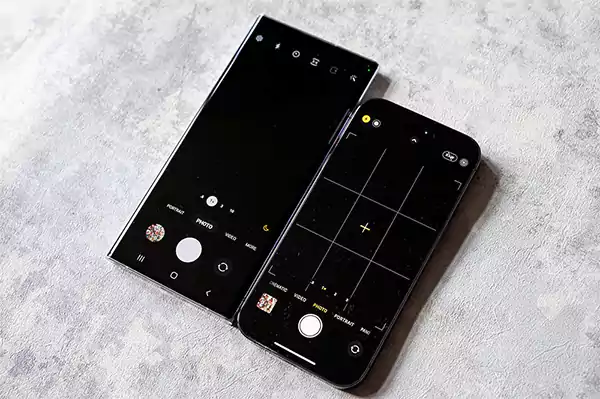
iPhone has better video quality due to better stabilization and more consistent overall video quality, no matter what light levels you are shooting in. Video content creators are using iPhones primarily due to their high video quality and stabilization compared to Samsung phones.
There are different ways to compare photographs taken during the day:
- Samsung has better color and brightness in its pictures than the iPhone.
- iPhone has more natural and realistic colors in the photos it takes than Samsung does.
- Samsung has more megapixels than an iPhone does in its camera tech.
There is no difference in low-light performance between the two flagship devices. But:
- Samsung does have brighter night shots, but the distortion in the iPhone images will be less than what you get from Samsung.
- The video capabilities of the iPhone are far superior to those of the Samsung S25 or any other Samsung phone.
- iPhones provide better stabilization while filming video and remain consistent with light levels, no matter the amount of light available at the time.
When uploading videos to social media, iPhones also show better upload quality. Apps such as Instagram and Snapchat are optimized for use on iOS devices, while uploads from Samsung devices may appear to be slightly compressed.
In conclusion, Samsung has more photography options than iPhone, but iPhone has better video and social media capabilities than Samsung.
Battery Life & Charging: Which Actually Lasts Longer?
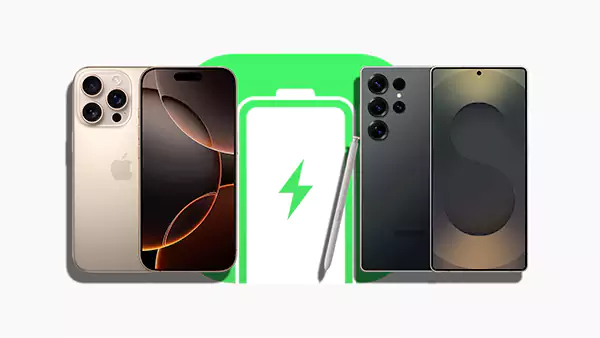
Samsung has a longer battery life on a single charge than the iPhone. There is also more battery capacity in a Samsung phone’s battery than in an iPhone’s battery.
- Battery Capacity: Samsung has a larger battery capacity than the iPhone; however, Apple uses software optimization to maximize battery life.
- Charging Speed: Samsung has faster charging speeds than iPhone, but both companies have built their phones to be safe to charge.
- Battery Health: Over the long run, iPhone has better battery health. Samsung will lose its battery capacity faster than the iPhone.
Occasionally, system glitches can affect notifications or device behavior, which is why some users troubleshoot problems like phones not ringing properly when diagnosing performance or system issues.
Software Experience: iOS vs Android (Daily Use Reality)
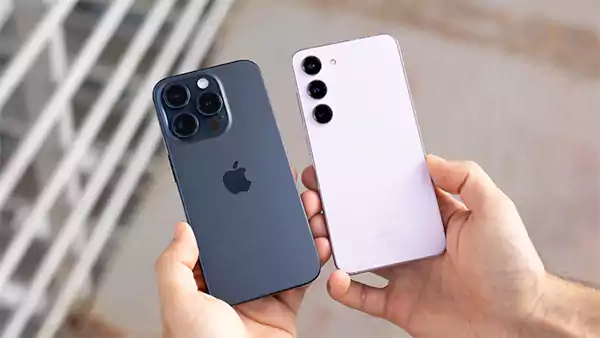
An easy comparison of the systems will tell you that the iPhone is better for users who don’t use computers or other complicated devices, while Android offers more functionality and flexibility.
The following is an easy-to-read summary:
- Ease of use: The iPhone has a simpler user interface and is therefore easier for new users to learn how to use than Android.
- Customizations: The Android operating system (OS) provides more options for customizing your device than Apple’s iPhone.
- Software update longevity: The average life span of an iPhone is approximately 5-6 years. Android devices typically have an average life span of 4-5 years.
- Privacy/Security differences: Apple has a strong focus on user privacy, while Android lags behind.
Apple’s ecosystem integration is another advantage, especially for users working across Apple devices who may use guides like copy and paste on Mac to improve productivity.
Storage, Connectivity & Hidden Features
Samsung provides greater flexibility with its hardware, while Apple provides faster and more consistent ecosystem integration (i.e., Apple provides a more cohesive product experience across its devices).
Examples of Key Differences:
- Some Samsung devices have expandable storage, and no Apple devices have expandable storage.
- Both manufacturers now use USB-C on their newest devices.
- Samsung devices offer desktop mode within the device using the DeX application.
- File transfers on a Samsung device are generally easier than those on an Apple device.
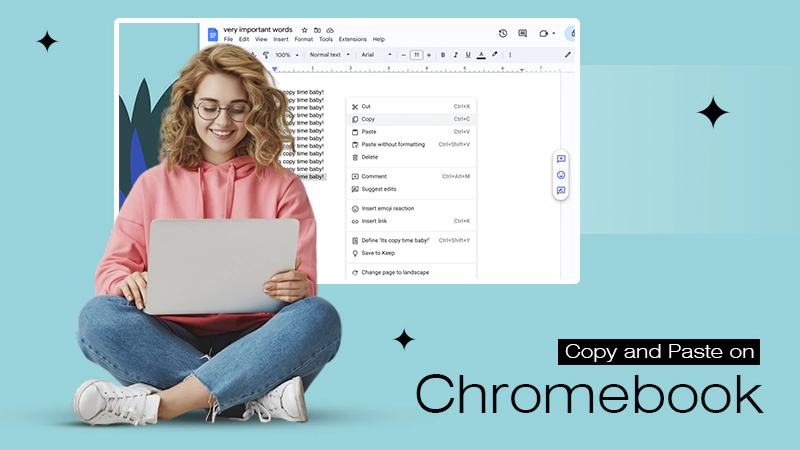
Users who work across multiple platforms sometimes need help with operating systems outside the Apple ecosystem, such as learning how to copy and paste on a Chromebook.
Price & Long-Term Value: Which Is Worth Your Money?
Here’s a side-by-side comparison of different factors and which phone is going to be money well spent.
| Factor | iPhone | Samsung |
| Upfront cost | Higher | Lower |
| Resale value | Excellent | Moderate |
| Repair cost | Expensive | Slightly cheaper |
| Longevity | Longer usable life | Slightly shorter |
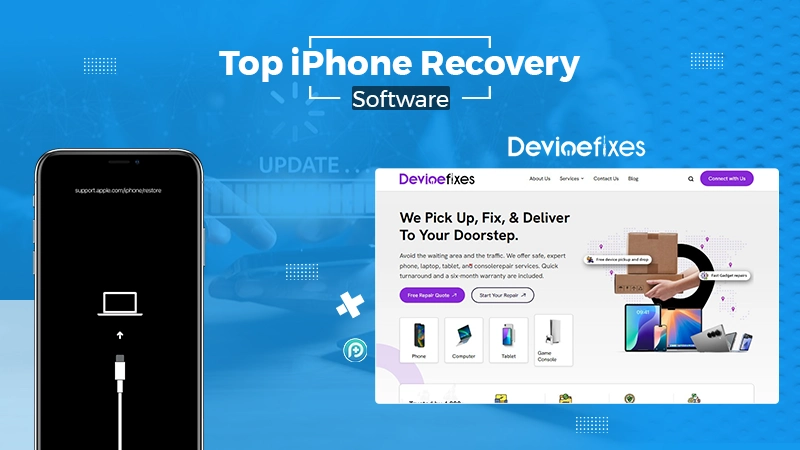
Data protection is also important for long-term value, and users sometimes rely on tools like iPhone recovery software if files are accidentally lost.
iPhone vs Samsung: Pros and Cons (Honest)
Both phones have strengths and weaknesses depending on user needs.
iPhone Pros & Cons
| Pros | Cons |
| Best long-term performance | Higher price |
| Excellent video quality | Limited customization |
| Better resale value | Slower charging |
| Longer software support |
Samsung Pros & Cons
| Pros | Cons |
| Better display technology | Lower resale value |
| More customization options | Slightly weaker long-term performance |
| Faster charging | Software consistency varies |
| Better hardware flexibility |
Is Samsung Better Than iPhone?
Samsung is superior to iPhone in regard to providing a user with customizable options. The ability to perform multiple tasks at once and more advanced hardware capabilities.
It is made for the following types of users:
- Power users and multitaskers
- Customization enthusiasts
- Hardware-focused users
With a Samsung phone, you have more options and flexibility when using it.
Is iPhone Better Than Samsung?
Long-term users, content creators, businesses, and ecosystem users are better served with the use of an iPhone as:
- iPhones provide stability/reliability that lasts through time.
iPhones outperform Samsung in terms of overall reliability, video quality, and consistent performance over the long haul.
Which Is Better: iPhone or Samsung?
Now here’s a simple table that will tell you which phone is better for each user type.
| User type | Best choice |
| Gamers | iPhone |
| Business user | iPhone |
| Camera user | Samsung |
| Budget user | Samsung |
| Long-term user | iPhone |
What is the Best Phone in the World Right Now?
There is not one best phone in the world, as the best phone for an individual is determined by their own preferences and way of life, such as the following:
- Budget
- Camera
- Performance
- Software
- Display type
Depending on the above factors, iPhones tend to be best for people wanting stability and good video quality, while Samsung phones tend to be best for people wanting a great display and lots of customization options.
Long-Term Reliability & Repairability
Real-world repair data indicates that:
- iPhones have longer-lasting batteries and mostly stay usable past 24 months, while Samsung’s battery life is shorter than the iPhone’s.
- The cost of repairing an iPhone’s screen will always exceed that of a Samsung screen.
- Charging ports may fail on either brand. The price to repair the charging port is comparable across both brands.
Repair experts agree that although it is more common for Samsung’s to fail than an iPhones’, repairs are more complex for iPhones than for Samsung’s.
Conclusion
There is no answer to whether an iPhone vs Samsung phone is better; this all depends on your unique circumstances. The benefit of using an iPhone is that it has superior long-term reliability, video quality, and resale value, which indicates long-term performance.
Therefore, if you seek a phone that will last as long as possible and that you can rely upon, then iPhones deserve consideration. Conversely, if you merely want a better display, faster charging options, and customizable features, Samsung phones should be taken into consideration by users looking for more powerful devices.
FAQs
Q: Which phone lasts longer, iPhone or Samsung?
Q: Which phone is easier to repair?
Ans: Comparatively, Samsung is easier to repair and costs less. On the other hand, iPhone’s take time and are quite expensive to get fixed.
Q: Which phone has better resale value?
Ans: Phones can be sold for a good value even after being used for a good amount of time; it doesn’t lose their value that much. But Samsung phones can lose their value pretty easily.
Q: Which phone is best for long-term use?
Ans: The iPhone is ultimately the smarter choice when it comes to sustaining a long-term investment in a device, given that both devices provide high-quality functionality as well as continued software updates.