

Ans. India’s manufacturing unit is currently handling all the flagship models, including standard and Pro, as well as the previous generation.
Why is Apple Moving iPhone Production to India in 2025?
One of the major highlights of 2025 was the significant shift of Apple production units to India, just as the company continues expanding its ecosystem with products like the iPhone 17 colors lineup.
So why is Apple moving iPhone production to India despite having a fully functional assembly unit in China?
Table of Contents:
- How China Became Apple's Main Manufacturing Hub?
- What Changed After 2020?
- Why Apple Needed Manufacturing Diversification?
- Why is Apple Moving iPhone Production to India?
- Geopolitical Tension Between the US and China
- Apple Key Suppliers in India
- Can India Fully Replace China?
- Challenges Faced by Apple While Expanding iPhone Production in India
- How Apple's India Move Impacts the Global Smartphone Industry?
- Did iPhone Become Cheaper Because of Manufacturing in India?
- Future of Apple iPhone Manufacturing in India
- Expert Opinions on Apple’s Production Shift to India
- Final Thoughts
- FAQS
How China Became Apple’s Main Manufacturing Hub?
For nearly two decades, China has been the hub for assembly units, serving as the epicenter of iPhone manufacturing. The main reason behind China being able to cater to such a massive demand was due to its large workforce at a cheaper rate and advanced industrial networks.
Apple partnered with viable manufacturers like Foxconn, Pegatron, and Wistron, helping the company maintain its competitive edge in comparison with the ongoing iPhone vs Samsung rivalry.
What Changed After 2020?
The seed to shift Apple supply chain India was laid back in 2020. COVID-19 and the US-China tense relations exposed the bottleneck.
Soon after COVID-19, the sudden upsurge in labor costs completely slashed the advantage that Apple was leveraging. These were the two major factors that led to the discussion around Apple’s iPhone production shift to India.
Why Apple Needed Manufacturing Diversification?
2020 was the eye-opener for Apple. They soon realized that having diversification in manufacturing would help them mitigate global risk and cement their identity as an innovative brand. As Apple continued expanding its ecosystem, it also focused on software and hardware innovations, including support for the Apple Pencil on iPhone experience.
What Apple needed was a strategy that aimed to:
- Reduce operation risk
- Improve supply chain resilience
- Minimize collateral damage from political chaos
- Enable faster distribution across the world without disruption
And this ultimately led to Apple iPhone production moving to India reasons 2025.
Why is Apple Moving iPhone Production to India?
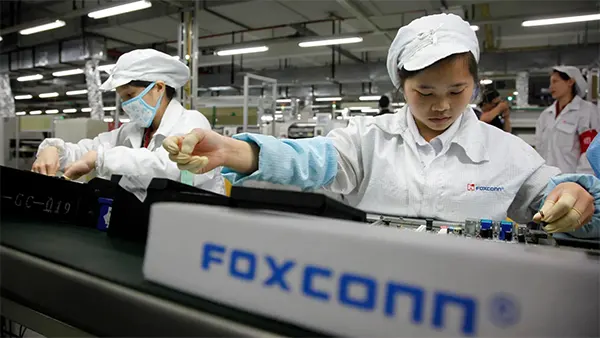
Increasing manufacturing capacity also supports Apple’s growing lineup of accessories, including products used with an Apple Watch with Android setup.
Some other crucial factors include:
- Lower labor cost compared to China and India, being neighboring countries of China, indirectly means the hotspot remains the same.
- Lower operation costs and the constantly evolving technology landscape of India made the country an attractive option to expand its manufacturing unit.
- Incentives and government schemes were the key drivers for Apple iPhone production move to India reasons.
- Incentives include financial support, export subsidies, support for expansion, and access to resources.
- India is expanding its presence in providing sophisticated manufacturing plants, semiconductor initiatives, and supplier networks.
Ultimately, all the factors played a vital role in supporting shifting Apple supply chain India for long-term sustainability. And the fact that India is the largest smartphone consumption market made it a more viable demographic area.
This way, Apple had a golden opportunity to penetrate the Indian market and strengthen its brand presence. All of this was the contributing reason for Apple making a manufacturing unit shift to India.
Geopolitical Tension Between the US and China
After 2020, the tariff plans, political back and forth, and uncertainty in maintaining a stable relationship encouraged Apple to take a big leap.
This was the right call as it ultimately reduces the dependency on a single region and makes their supply chain more stable. And the geographical advantage, like easy access to the global market and swift shipping routes, was another strategic component that made India a feasible spot to set up their manufacturing plant.
Moreover, in terms of foreign investment, Foxconn expanded its manufacturing units in India, and new avenues were unlocked.
Tata Electronics was the backbone for the swift setup in India, along with the involvement of Pegatron, which aided the setup of the Apple supply unit in India. Several states became the hotspots, but Tamil Nadu and Karnataka were part of the framework.
Apple Key Suppliers in India
Finally, in 2023, Apple started assembling its flagship models in India. The company is actively supporting:
- Supplier relocation.
- Local component sourcing.
- Logistics development.
- Manufacturing ecosystem growth.
The key manufacturing suppliers that are operational in India are: Foxconn, Tata Electronics, Pegatron, and Winstron Electronics. Faster local manufacturing can improve the availability of replacement parts and accessories, helping users resolve issues such as one AirPod not working more quickly.
Can India Fully Replace China?
As of the current landscape, completely shifting the manufacturing units to India won’t make any sense, as the initial idea was to diversify the manufacturing units.
Moreover, complete reliance cannot be shifted to India because of better ecosystem maturity in China, infrastructure limitations in India, and component manufacturing dependencies.
Challenges Faced by Apple While Expanding iPhone Production in India
India’s resources and technology are still in the developing stage, something that China had gone through earlier. It’s evident that while setting up a newly established manufacturing unit, the problems will cease to exist.
Some of the area that needs constant supervision and more robust investment include:
- Transportation network
- Port networks and efficiency
- Supply chain logistics
- Specialized workforce
India continues to bestow a specialized, trained workforce to cater to such a large production. Furthermore, many crucial components are still sourced from China, and to reduce these dependencies, India has to invest in its very own semiconductor manufacturing and expand its component manufacturing.
How Apple’s India Move Impacts the Global Smartphone Industry?
Since the global emergence of India as a manufacturing hub for iPhones, the dominance of China has been put on hold. Moreover, it also facilitated the easy availability of parts for iPhone repair, as earlier it used to take months to source the necessary components.
Although China’s contribution in manufacturing still remains crucial to Apple, the dependencies and concentration have flourished.
The expansion facilitates:
- Better job creation and the introduction of various teaching programs for workers.
- Subtle shift towards investing in emerging technology to facilitate development.
- Overall development of the workforce and diversifying their knowledge and hands-on skills.
For the past 2 years, the manufacturing unit in India meticulously carried out the production, roughly accepting 25% of global orders. And with this success, India could attract other major smartphone companies to set up their plant.
Did iPhone Become Cheaper Because of Manufacturing in India?

iPhones sold in India are not significantly cheaper, but they helped reduce the cost a little bit on premium Pro models. Earlier, manufacturing an iPhone cost 22% basic customs duty in India, and with local assembly, all such taxes were removed.
Another reason it didn’t get much cheaper is that India only assembles the iPhone, whereas all the major components and the chipset are still imported from South Korea.
After the final assembly, only 3% of the cost is reduced cause even after custom duty is removed from the calculation, Apple is still required to bear the 18% GST.
Even in the future, if complete reliance is shifted to India, users won’t witness much of a change in the price tag. This is because Apple has positioned itself as a luxury brand; the benefits consumers are supposed to receive are channeled through credit card and bank offers.
Also Read: iPhone Touch Screen Not Working? Step-by-Step Troubleshooting Guide
Future of Apple iPhone Manufacturing in India
The future is bright for India’s manufacturing division as the possibility of transitioning to a core export hub is about to be a reality. By the end of 2026, Apple suppliers aim to increase their market share to 30% of the global market, which is a massive leap in a short span of time.
And additional things we could expect are:
- China’s monopoly skimming down
- Export hubs are scaling for swift supply. Allowing millions of units to directly reach North America, shielding Apple from fluctuating tariff plans.
- Earlier, when India had to wait a few more weeks to get their hands on the flagship iPhones are a thing of the past. As the global launch and launch in India are done simultaneously.
- Upcoming plans for Apple are to not just capitalize the India market for manufacturing but shift the sourcing component to Tata.
- Tata’s fresh expansion at Hosur, Tamil Nadu, is consistently adding to produce fresh lineups to support the global demand.
Expert Opinions on Apple’s Production Shift to India
Many economic experts view this as a pivotal point for Apple, as this is going to be a beneficial relocation. Several critical aspects that were emphasized were:
- An analyst from Financial Times highlighted the fact that it’s a great escape from Apple to get mauled by rising tariff duty. Shifting to India put Apple in a much safer position, allowing it to produce cheaper iPhones.
- By jumping to catering the 28% of global demands, this has surely laid a Crack on China’s monopoly intent.
- The dependencies of Taiwan-based tech giants have significantly decreased. Making Tata one of the arsenals for Apple.
- By this shift, 70% of new job opportunities were created in direct assembly lines, making it the first formal industrial workforce in India.
However, apart from this, certain skepticism remains as many experts pointed India lacks the necessary technology to fully complete the ecosystem of assembly. Modules like advanced cameras, sensors, and OLED screens are still imported.
Moreover, it has been noticed that China has deliberately slowed down the supply of iPhones due to Geopolitical reasons and concerns over losing its dominance.
Final Thoughts
The answer to why is Apple moving iPhone production lies in a combination of economic, strategic, and growth factors. To sustain itself on the market and tackle the tense geopolitical effects, expanding the supply chain was the most viable decision.
Slowly, but Apple is moving towards creating a resilient ecosystem that is capable of handling long-term growth. Apple’s supply chain in India is strategically and evidently geared to grow and become a manufacturing powerhouse.
Read Next: iPhone vs Samsung: Which Smartphone Is Better for You?
FAQS
Q1. Which iPhones are being assembled in India?
Q2. Has Apple left China completely?
Ans. No, Apple hasn’t left China; it’s more like a strategically implemented shift to sustain in a volatile market.
Q3. Was the strategy to diversify the supply chain helpful for Apple?
Ans. Yes, this decision surely had a positive impact on its supply chain, removing reliance on a particular manufacturing unit.
Q4. Are India-made iPhones exported specifically for India or globally?
Ans. iPhones that are assembled in India are exported globally, including Europe, the Middle East, America, and other parts of the world.
Sources:
India Production in India Jumps 53% – Times of India