Educational dialogues commonly include cybersecurity, identity management, network security, governance, compliance, data protection, threat monitoring, and ethical tech practices.
The Educational Significance of AZ-500 in Cloud Security and Cybersecurity Fundamentals

Updated On August 5, 2026

“Cybersecurity is much more than a matter of IT.” — Stephane Nappo (Global CISO)
Today, cloud tech powers daily use services like banking, healthcare, education, communication, and entertainment. As organizations move more of their operations to cloud platforms, protecting digital identities, sensitive data, and connected systems has become a fundamental responsibility rather than an optional consideration.
As cloud technology is evolving, so is its education. Instead of focusing only on traditional network protection, learners must understand how security operates in cloud environments, where identity, governance, compliance, monitoring, and data protection work together to reduce risk.
In cloud education, AZ-500 thoroughly explores these core cybersecurity principles. Rather than viewing it solely as a certification objective, students and technology professionals can use its topics to build a deeper understanding of identity management, network security, governance, compliance, threat monitoring, and responsible technology practices. Studying these concepts develops technical knowledge while encouraging critical thinking, ethical decision-making, and a stronger appreciation of how secure cloud environments support today’s digital world.
Table of Contents:
- Understanding Cloud Security
- The Growth of Cloud Technologies
- Identity and Access Management
- Protecting Digital Information
- Network Security Concepts
- Security Monitoring and Awareness
- Governance and Compliance
- Responsible Technology Practices
- Skills Developed Through Cloud Security Education
- Career Opportunities
- Applications Across Industries
- Conclusion
- FAQs
Understanding Cloud Security
Cybersecurity covers the collection of technologies, policies, processes, and best practices designed to protect cloud-based systems, applications, and digital information.
Educational discussions commonly include:
- Identity safety
- Access management
- Network security
- Data confidentiality
- Risk control
- Security monitoring
Together, these concepts explain how organizations maintain secure and reliable cloud domains.
The Growth of Cloud Technologies
Cloud computing has significantly changed the way organizations manage technology.
Conventional computing environments relied heavily on locally installed servers and hardware. Modern cloud platforms provide scalable infrastructure, flexible resource management, and internet-based services that support organizations of every size.
Exploring this technological evolution helps learners understand why cloud security has become increasingly important in today’s digital economy.
Identity and Access Management
Identity management constitutes one of the core educational areas within cybersecurity.
Educational topics commonly include:
- User authentication
- Permissions
- Multi-factor authentication
- Identity verification
- Role-based clearances
- Secure access
These principles demonstrate how organizations ensure that only authorized individuals can access sensitive systems and data.
If you want to monitor the entire facility where your employees are housed, consider installing a connected sensor system in the facility.
Protecting Digital Information
Information security remains essential in cloud environments.
Educational dialogues commonly explore:
- Encryption
- Secure storage
- Data integrity
- Confidentiality
- Privacy protection
- Backup techniques
Understanding these principles helps learners recognize the importance of protecting valuable digital assets.
Network Security Concepts
Cloud services depend on secure communication between systems.
Educational concepts include:
- Firewalls
- Secure communication
- Network segmentation
- Traffic control
- Virtual networking
- Threat prevention
These topics demonstrate how organizations reduce risks while maintaining efficient connectivity.
Security Monitoring and Awareness
Preserving secure environments requires continuous observation.
Educational discussions often include:
- Activity monitoring
- Event logging
- Hazard detection
- Security alerts
- Operational visibility
- Incident awareness
Monitoring technologies enable organizations to identify unusual activities and respond appropriately.
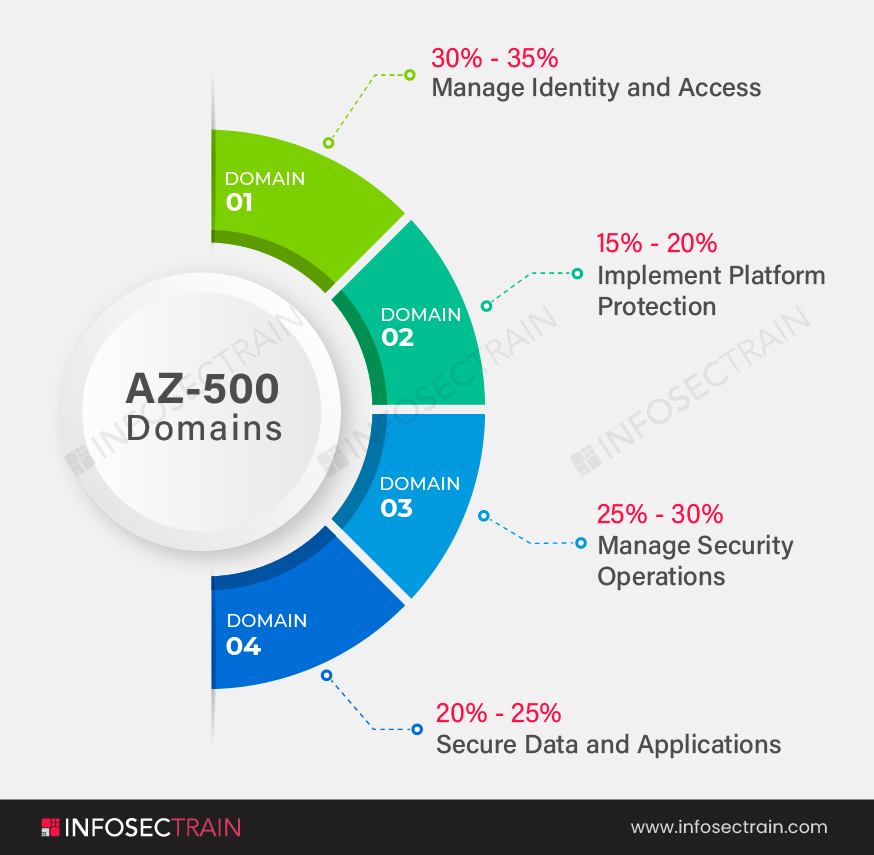
The infographic summarizes the four main domains to focus on for the AZ-500 exam:
Governance and Compliance
Technology education also underlines organizational responsibility.
Educational concepts commonly include:
- Governance frameworks
- Safety policies
- Regulatory compliance
- Organizational accountability
- Threat evaluation
- Professional standards
These principles encourage responsible management of cloud technologies.
Responsible Technology Practices
Ethics plays an increasingly meaningful role in cybersecurity education.
Educational discussions include:
- Privacy
- Transparency
- Fairness
- Professional ethics
- Accountable innovation
- Legal awareness
Ethical tech practices help learners understand the social impact of cybersecurity decisions.
Learners, educators, and technology professionals interested in expanding their understanding of cloud security, identity management, governance, compliance, networking, and digital protection can learn here through trusted educational establishments, academic publications, official documentation, and research resources that present cybersecurity concepts from an educational perspective.
Skills Developed Through Cloud Security Education
Learning cybersecurity supports the development of valuable professional competencies.
Examples include:
- Critical thinking
- Analytical logic
- Problem-solving
- Communication
- Teamwork
- Adaptability
These transferable skills remain valuable across many industries and professional roles.
Career Opportunities
Educational understanding related to cybersecurity supports a wide range of career pathways.
Examples include:
- Cloud Security Engineer
- Cybersecurity Analyst
- Systems Administrator
- Cloud Solutions Architect
- Security Operations Specialist
- Identity Management Consultant
- Information Security Analyst
- Technology Consultant
As firms continue investing in secure cloud infrastructure, professionals with cybersecurity knowledge remain in strong demand worldwide.
Applications Across Industries
Cloud security backs reliable digital services in many sectors.
Examples include:
- Healthcare
- Education
- Banking
- Government
- Retail
- Manufacturing
- Telecommunications
- Scientific Research
These sectors depend on secure cloud environments to protect information, improve collaboration, and support digital innovation.
Conclusion
The educational notions associated with AZ-500 provide learners with valuable insight into the technologies and principles that protect today’s cloud computing environments. By exploring identity management, network security, governance, compliance, data security, monitoring, and responsible technology practices, individuals develop a comprehensive understanding of secure cloud infrastructure. As organizations continue expanding their use of cloud technologies, studying these concepts from an educational standpoint promotes critical thinking, ethical responsibility, continuous learning, and professional growth while helping learners understand one of the most essential areas of modern information technology.
FAQs
What educational topics are associated with AZ-500?
Why is cloud security vital?
Cybersecurity helps protect digital information, users, applications, and infrastructure while maintaining reliable and trustworthy cloud services.
Why is identity administration included in cloud security education?
Identity management ensures that authorized users can securely access digital resources while protecting sensitive organizational information.
Why is management important in cloud computing?
Governance establishes policies, standards, and accountability that support secure, responsible, and consistent technology management.
Why is constant learning important in cybersecurity?
Cybersecurity evolves rapidly because of advances in cloud computing, artificial intelligence, automation, regulations, and emerging digital threats.
Can studying cloud security notions support future careers?
Yes. Educational knowledge of cloud security provides a strong foundation for careers in cybersecurity, cloud engineering, systems administration, governance, compliance, security processes, and technology consulting.